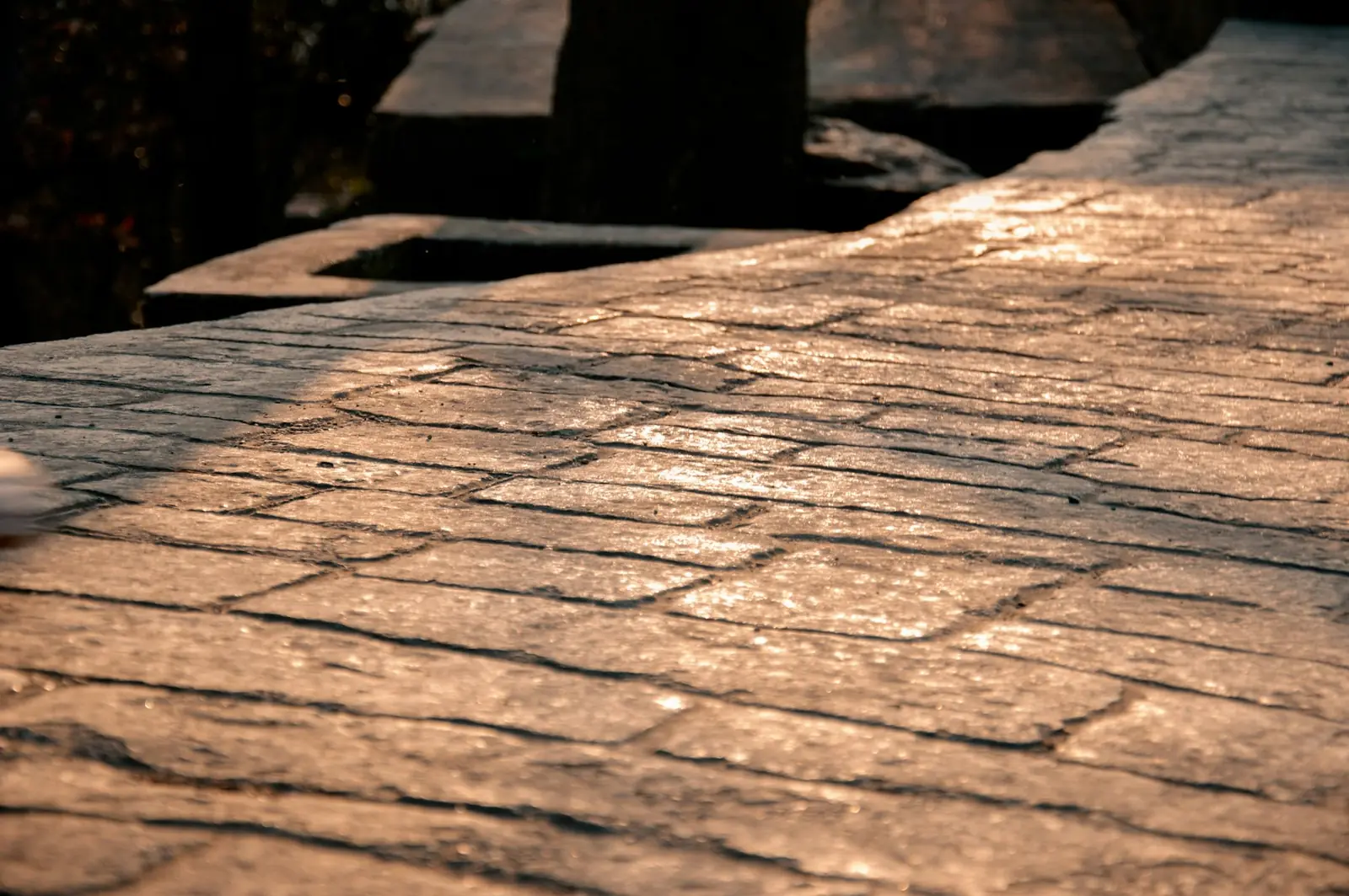
Stamped concrete in Troy, MI gives you the look of stone, slate or brick with the strength of a single poured slab. We place air-entrained concrete, add integral color, press texture mats into the surface while it is still plastic, then apply release color and a sealer suited to our winters. It works well for patios, front walks, pool decks and driveway borders. Stamped concrete needs resealing on a regular schedule, and we tell you that up front. Call (248) 453-1088 to talk about patterns and colors.
Patterns and finishes we install
Most Troy homeowners choose one of a handful of patterns that suit colonial and ranch architecture. We bring samples to the estimate so you can see colors in daylight next to your brick or siding.
- Ashlar slate: rectangular "cut stone" pieces in mixed sizes. The most popular pattern for patios.
- Random stone and flagstone: irregular shapes with deeper texture, good around landscaping and fire pits.
- Wood plank: long boards with grain texture, a common choice for pool decks and covered porches.
- Cobble and running bond brick: popular as borders around plain driveways and walks.
- Seamless texture: stone texture without grout lines, a calmer look that is easier to keep clean.
- Exposed aggregate: the surface paste is washed off to reveal stones, offering good traction and a different style.
How the stamping process works
Stamped concrete is a timing job. The crew pours and screeds the slab, then broadcasts or mixes in color, applies release agent, and presses the texture mats in before the concrete gets too stiff. On a hot July afternoon that window is short, so we staff stamped jobs with extra hands. Control joints are still required. We place them along pattern lines where possible so they blend in.
Base preparation is the same as any slab: compacted granular base, slope away from the house and air-entrained concrete. Decoration does not change the physics of freeze-thaw. Our concrete patios page explains the base and drainage side in more detail.
Sealing and long-term care
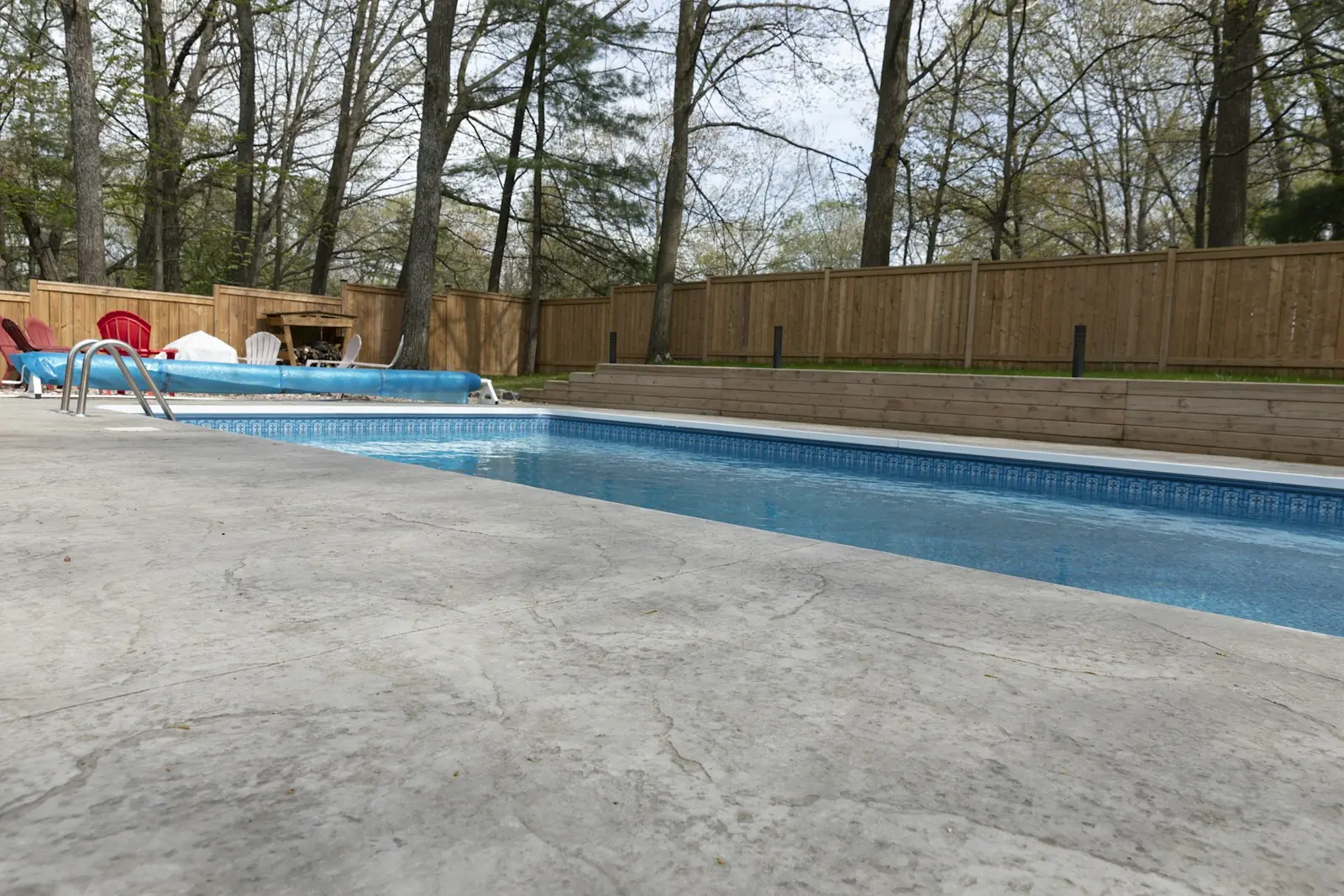
Sealer is what keeps stamped concrete looking sharp, and it is the part owners most often skip. The Michigan Concrete Association concrete care guide recommends waiting at least 30 days before sealing new concrete and avoiding deicers entirely the first winter. After that, plan on resealing stamped surfaces on a two- to three-season rhythm, sooner if the color starts to look chalky or water stops beading. Use sand for traction rather than salt when you can, and never use magnesium chloride or calcium chloride on any concrete.
Stamped concrete versus pavers
Pavers and stamped concrete look similar from the street but behave differently through a Michigan winter. Pavers can shift and heave individually, and weeds grow in the joints, but a single broken paver is easy to swap. Stamped concrete has no joints to weed, but cracks are harder to hide and the surface needs resealing. Our full comparison, stamped concrete vs pavers, walks through cost, upkeep and repairs.
Where stamped work fits around Troy
Stamped patios are common in the backyards of the subdivisions between Long Lake and Square Lake, where homes back onto mature trees and owners entertain outside from May through October. Near the Big Beaver corridor and Somerset Collection, we pour more stamped front walks and entry landings, where curb appeal matters for homes that sell quickly. Families near Troy Historic Village often ask for a cobble or brick border that matches older architecture.
We also install a lot of decorative concrete outside Troy. Owners in Birmingham often want stamped walks and steps that suit older homes, and newer subdivisions in Shelby Township bring requests for stamped pool decks and large patios.
Stamped driveways and borders
A fully stamped driveway is possible, but it costs more and needs more upkeep than a broom finish, because tires and snow shovels wear sealer faster. A common compromise is a plain concrete driveway with a stamped border, a stamped apron at the garage, or a decorative walkway that ties the driveway to the front door. You get most of the visual effect for a fraction of the maintenance.
What affects stamped concrete cost
Price depends on the size of the area, the pattern, the number of colors, whether there are steps or curves, base repair and access for the truck. Multiple colors and hand-detailed edges take more labor than a single color with a simple border. We price each element separately on the quote.
If budget is tight, consider stamping the most visible area, such as the patio's front edge or the walk to the door, and using a broom finish elsewhere. A colored border ties the two together, and you can stamp more later.
Common questions
Is stamped concrete slippery in winter?
It can be if sealed with a glossy product and left untreated. We mix a fine anti-skid additive into the sealer on walking surfaces and recommend textured patterns for steps and walks. In winter, use sand for traction. Avoid letting ice build up from downspouts by redirecting them away from the stamped area before the first freeze.
How often does stamped concrete need resealing in Michigan?
Plan on resealing about every two to three seasons, or when water stops beading on the surface and the color looks dull. Driveways and heavily used walks may need it sooner than a covered patio. The first sealer coat goes on after the concrete has cured at least 30 days. Regular sealing protects both the color and the surface from salt.
Will stamped concrete crack?
All concrete can crack, stamped included. We reduce the risk with a compacted base, air-entrained concrete, the right thickness and control joints placed along pattern lines so they look intentional. Hairline cracks that stay tight are usually cosmetic. Cracks that widen or let panels shift point to a base or drainage problem worth looking at.
Can you match stamped concrete to my house?
Yes. We bring color samples and pattern photos to the estimate and compare them in daylight against your brick, stone or siding. A base color plus a darker release color gives depth that looks more natural than a single flat color. We note the exact color names on your quote so a future addition can come close to matching.