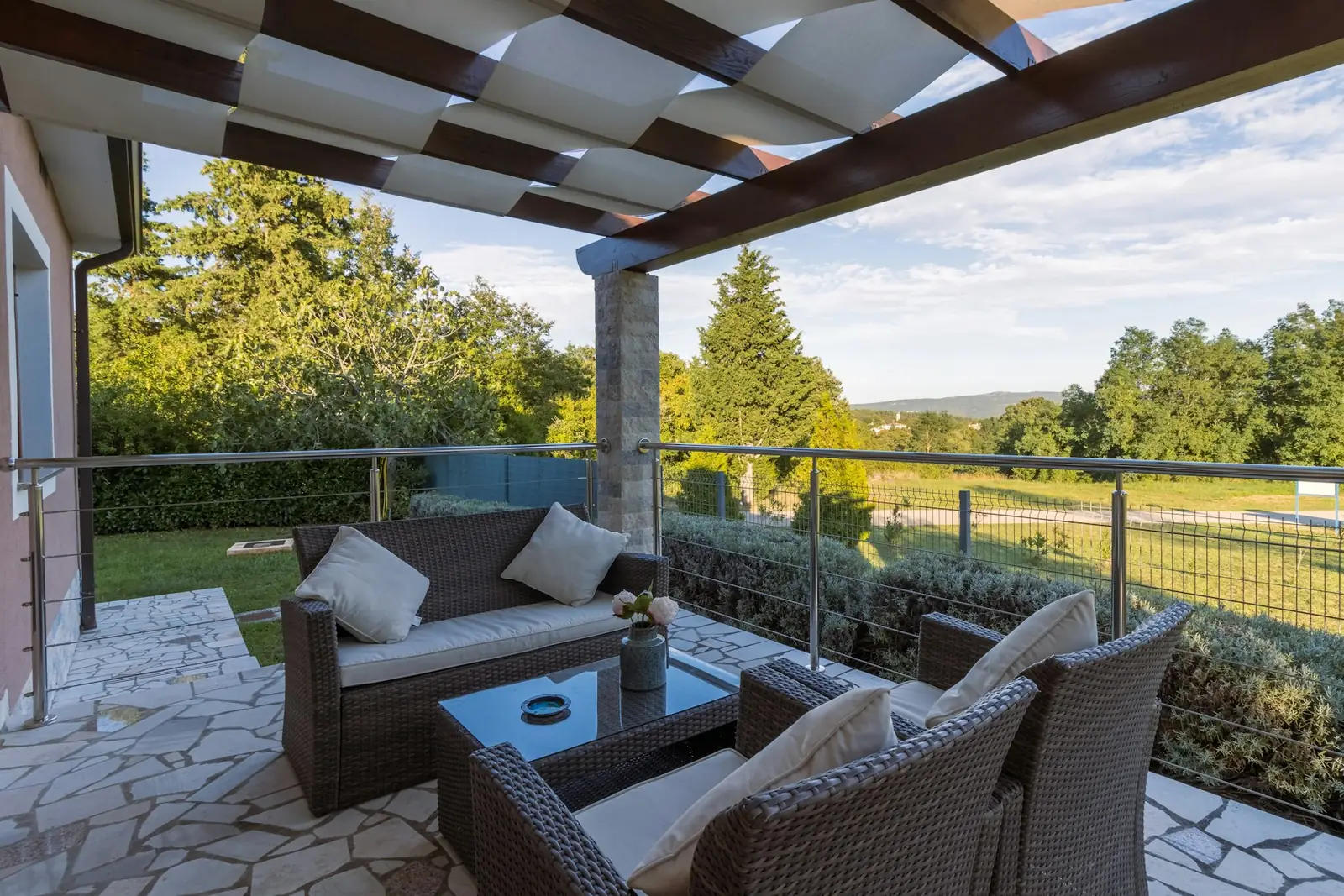
A new concrete patio in Troy, MI is a 4-inch air-entrained slab on a compacted base, sloped about 1/8 inch per foot away from the house, with control joints laid out before the pour. We build new patios, extend existing ones, and tear out heaved or settled slabs that tip water back toward the foundation. A plain broom finish keeps cost down; stamped or colored concrete adds style. Most patios are formed, poured and finished in a day or two. Call (248) 453-1088 to talk through size and layout.
Planning the right patio size
The most common mistake we see is a patio that is too small for the furniture. A dining table for six with chairs pulled out needs roughly a 12 by 12 foot area. Add a grill and a walkway past the table and you are closer to 14 by 16. Lounge chairs, a fire pit seating ring or a sectional need even more. We sketch your layout on the estimate so you can see the footprint before we set forms.
Think about the path, too. Where does the patio connect to the back door, the garage side door or the driveway? A short walkway or a step down from a slider often matters as much as the patio itself. If your back door sits high above grade, we can pour new concrete steps or a porch landing to tie it together.
Drainage comes first
A patio that slopes toward the house sends water against the foundation every time it rains. In clay soils like ours, that can mean a wet basement. We set the slope away from the house, about 1/8 inch per foot, and check where roof downspouts discharge. Sometimes the fix is as simple as extending a downspout past the edge of the new slab. Other times the yard needs a small swale or a drain line. We point those issues out before pour day, not after.
How we build a patio
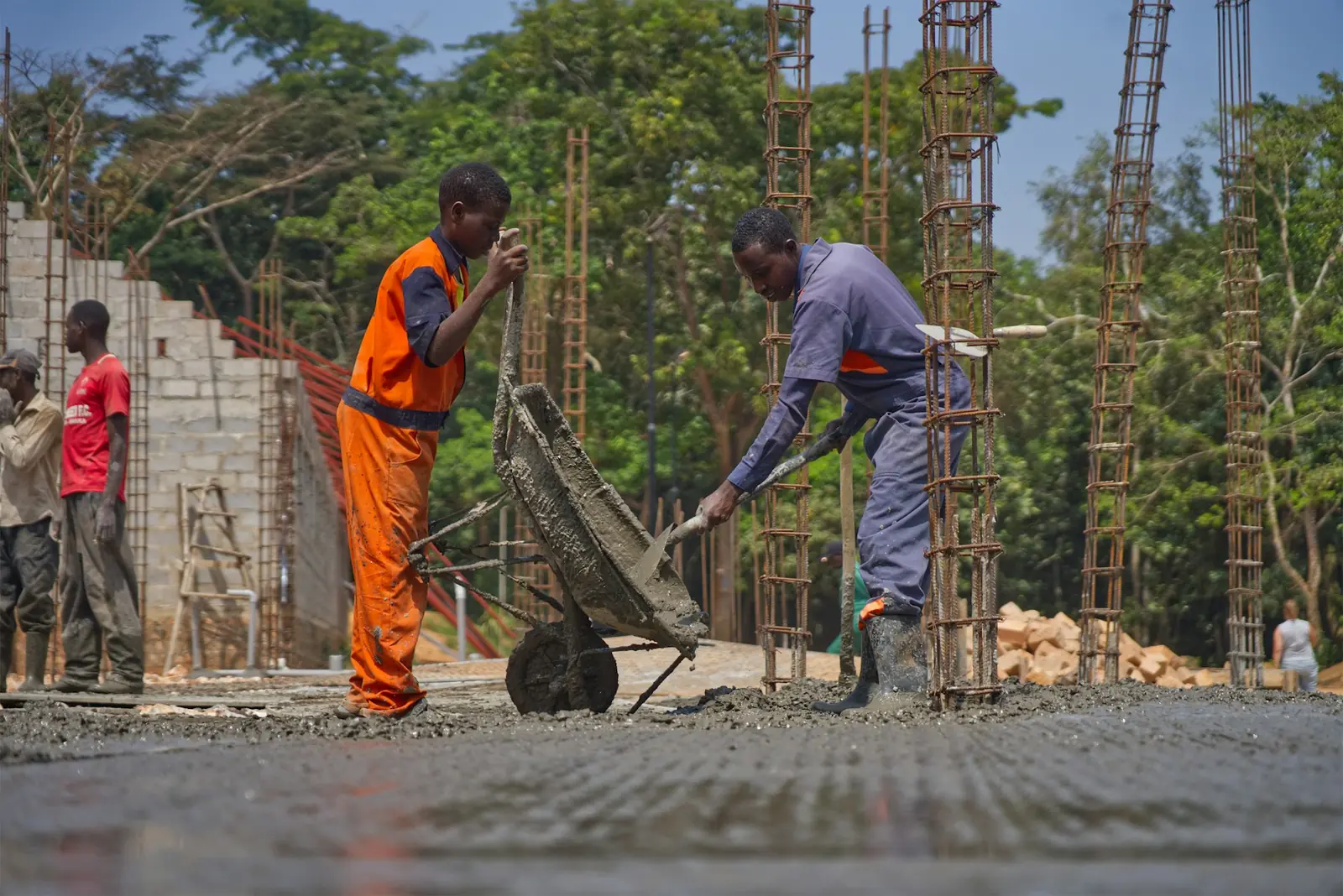
- Layout and digging. We mark the shape, call MISS DIG 811 so buried lines are located, and dig out sod and topsoil.
- Base. About 4 inches of compacted granular base gives an even, well-drained support layer.
- Forms and slope. Forms are set to grade so water runs off the far edge, not toward the house.
- Concrete. Air-entrained exterior concrete, 4 inches thick for normal patio use, thicker under a hot tub or masonry fire feature.
- Joints. Control joints every 8 to 10 feet, laid out to line up with corners and doorways so cracks form in straight lines.
- Finish and cure. Broom, smooth-edged border or stamp, followed by curing compound and protection from rain for the first day.
Extensions and replacements
Extending an older patio is a popular project. We tie the new pour to the old slab with an isolation joint so the two pieces can move independently. The color will not match exactly at first. New concrete is lighter and darkens with time. If the old patio is cracked, tipped or heaved, replacing the whole thing usually looks better and costs less in the long run.
Heaved patios are common where the old slab sits on topsoil or where frost gets under an edge. We correct that with proper base depth and grading, so the new patio sits on a stable layer.
Stamped and decorative options
Stamped patterns, integral color and decorative borders turn a plain slab into an outdoor room. Ashlar slate and random stone are the most popular patio patterns around Troy. See our stamped concrete page for options, or read stamped concrete vs pavers if you are still deciding between the two.
Backyards we see around Troy
Many Troy subdivisions built from the 1970s through the 1990s still have the small 10 by 10 slab poured by the original builder, now cracked and tipped toward the house. Near Stage Nature Center and the wooded lots along the Rouge River, backyards are shaded and stay damp, so drainage and slope matter even more. In the neighborhoods around Firefighters Park on Square Lake Road, owners often want a larger family patio with room for a grill and a table.
We pour patios outside Troy as well. Estate homes in Bloomfield Hills bring larger decorative patios and grading questions. In Clawson, smaller lots mean compact patios that need to fit carefully around garages and fences.
Permits for patios
In Troy, a ground-level patio inside your property line typically does not need a building permit. Covered patios, roofs, attached structures and anything near an easement can change that. Some neighboring cities require a zoning or flatwork permit even for a simple patio. Clawson, for example, asks for a zoning permit with a dimensioned drawing. We confirm the rule for your city when we quote.
Common questions
How thick should a concrete patio be?
A standard patio for people and furniture is 4 inches thick over about 4 inches of compacted base. If it will hold a hot tub, an outdoor kitchen or a masonry fire feature, we thicken that area or the whole slab and may add reinforcement. Thickness matters less than a stable base, proper slope and well-placed control joints.
Can a new patio be poured next to my house foundation?
Yes. We place an isolation joint where the patio meets the foundation so the slab and the house can move independently, and we slope the patio away from the wall. If the soil along the foundation has settled, we compact and fill it first, because a low spot there will drain water toward the basement.
How soon can I use my new patio?
You can walk on a new patio after about 24 to 48 hours and set light furniture on it after a few days. Wait about a week before rolling a heavy grill or hot tub onto it. If it is stamped or colored, we apply sealer after the concrete has cured about 30 days, so plan a short gap for that visit.
Is a concrete patio cheaper than pavers?
A plain broom-finish concrete patio usually costs less than a paver patio of the same size, and stamped concrete often lands between the two. The trade-offs are upkeep and repairs. Pavers can be lifted and reset after frost heave, while concrete has no joints to weed but needs resealing if it is stamped or colored.