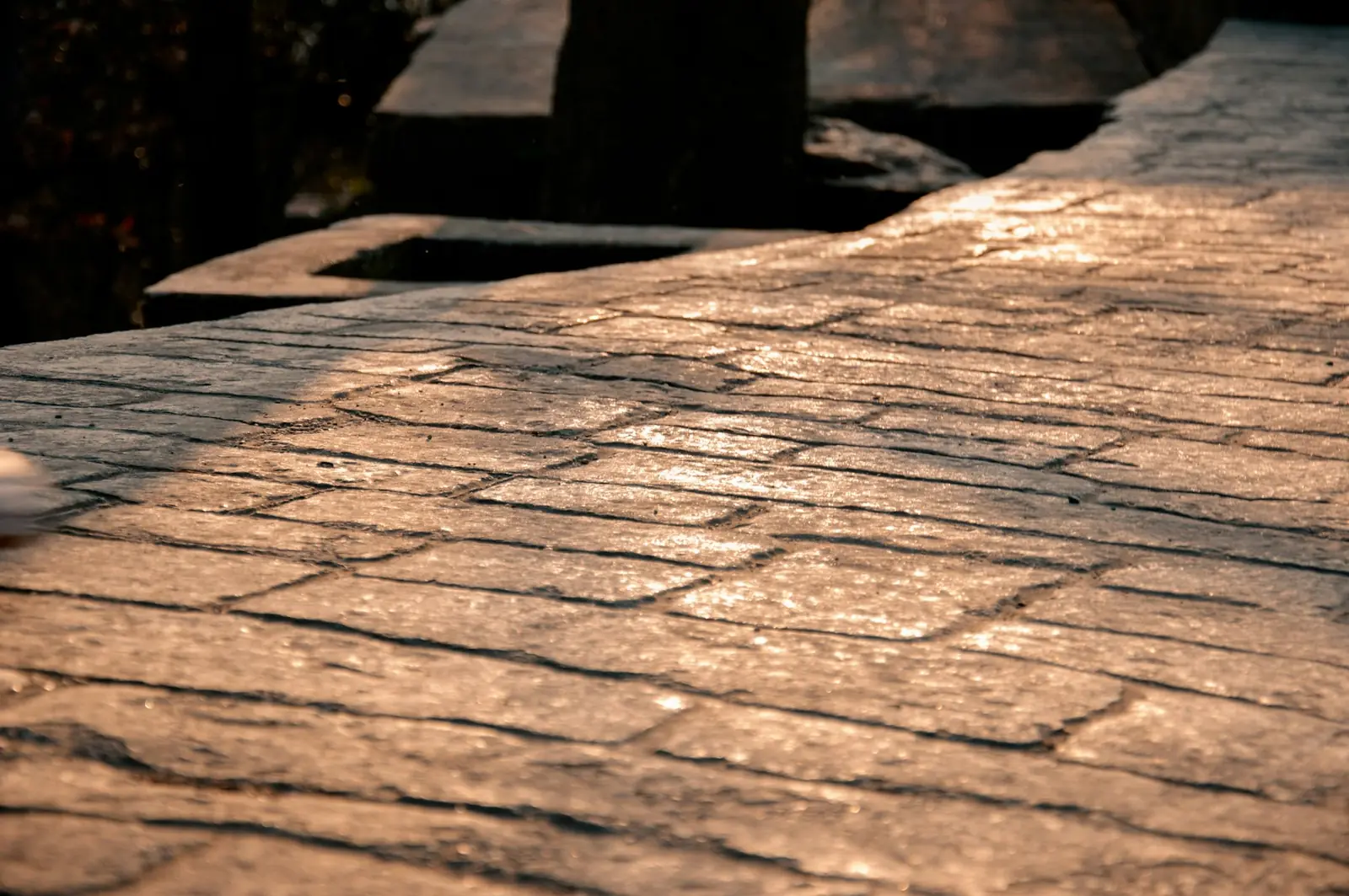
For a patio in Troy, MI, stamped concrete usually costs less up front and has no joints for weeds, while pavers are easier to repair one piece at a time and handle frost movement by shifting rather than cracking. Stamped concrete needs resealing every few seasons; pavers need joint sand topped up and occasional resetting. Both can look great and last when the base is built right. The better choice depends on your budget, how much upkeep you want and how you feel about cracks versus shifting.
How each one is built
Stamped concrete is a single poured slab, usually 4 inches thick, over a compacted base. While the concrete is still plastic, the crew presses texture mats into the surface to create a stone, slate, brick or wood pattern, then adds release color. After curing, a sealer protects the color and surface. Control joints are cut to manage cracking.
Pavers are individual concrete or stone units laid on a compacted aggregate base and a bedding layer of sand or fine stone. Edge restraints hold the field in place, and joint sand locks the pavers together. There is no single slab, so the surface can flex.
Michigan winters: frost and movement
Frost heave is the main concern in Troy. When saturated soil freezes, it can lift whatever sits on top. A concrete slab resists small movements but can crack if the base is poor. Pavers move individually, so a heave shows up as uneven pavers that can be lifted and reset in spring. In both cases, the real defense is a well-drained, compacted base and good slope away from the house.
Cracks versus shifting
All concrete can crack. On stamped concrete, control joints are placed along pattern lines to hide them, but a random crack is harder to disguise and harder to repair invisibly. Pavers do not crack as a surface, though individual units can chip or break. They can settle, shift or develop uneven joints, especially where downspouts or vehicles load the edges.

Upkeep compared
- Stamped concrete: Reseal every two to three seasons, more often on driveways. Use sand rather than harsh deicers, and never use magnesium or calcium chloride. Clean before resealing.
- Pavers: Top up joint sand, pull weeds or ants that move into the joints, and reset settled areas. Sealing pavers is optional but helps keep joint sand in place.
The Michigan Concrete Association care guide recommends no deicers on new concrete the first winter and sealing after the concrete is at least 30 days old.
Repairs
Paver repairs are straightforward: lift the affected units, fix the base and relay them. Matching new pavers to faded old ones can be tricky, so keep some spares. Stamped concrete repairs are harder. A cracked section can be cut out and replaced, but matching the color and pattern exactly is difficult. Crack sealing in a matching color is a common compromise.
Look and design
Both offer a wide range of styles. Stamped concrete creates a continuous surface with large-format patterns such as ashlar slate or wood plank. Pavers offer crisp edges, distinct units and patterns like herringbone that are hard to fake. Many Troy homes combine them, using a stamped patio with a paver border, or the reverse.
Cost
A plain broom-finish concrete patio is usually the least expensive option. Stamped concrete costs more than plain concrete, and pavers often cost more again, depending on the product and the pattern. Base work is a major part of both. Our driveway cost guide explains the factors that affect flatwork pricing in general.
Around Troy
In the subdivisions near Firefighters Park and Square Lake Road, many owners choose stamped concrete for big family patios. Homes with formal landscaping near the Big Beaver corridor are more likely to mix pavers and concrete.
If you choose concrete, see stamped concrete and concrete patios for how we build them. Salt is the main threat to either surface, so read how to stop salt scaling before your first winter.
Common questions
Which lasts longer in Michigan, stamped concrete or pavers?
Both can last decades with a good base and proper care. Stamped concrete lasts longest when it is air-entrained, jointed correctly and resealed regularly. Pavers last when the base drains well and edges are restrained. The bigger difference is how they age: concrete may crack, while pavers may shift and need resetting.
Are pavers better for frost heave?
Pavers handle small frost movements by shifting individually, and settled areas can be lifted and reset. Concrete resists small movements but can crack if the base heaves. Neither is immune. The best protection for either surface is a compacted, well-drained base and slope away from the house.
Can stamped concrete be repaired to match?
Small cracks can be sealed with a color-matched sealant, and damaged sections can be cut out and replaced. Matching the exact color and pattern is difficult, especially after the original has weathered. Resealing the whole surface after a repair helps blend the color. Pavers are easier to repair invisibly if you keep spare units.