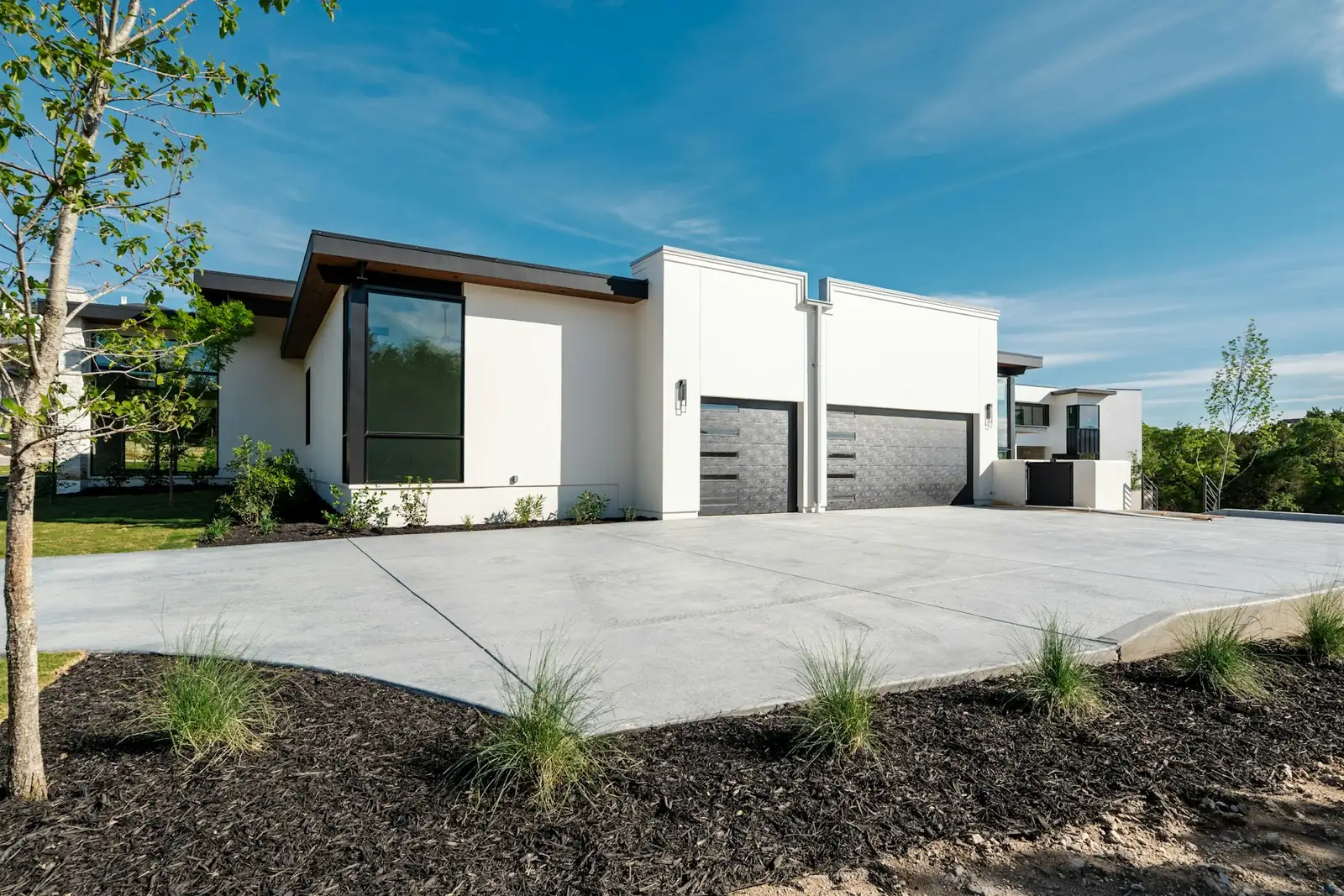
A concrete driveway replacement in Troy, MI means breaking out the old slab, fixing the base underneath, and pouring a new air-entrained driveway that sheds water and handles winter salt. Most two-car driveways are torn out one day and poured the next, then need about a week before you park on them. We quote the slab on your lot and the approach in the city right-of-way separately, because the approach usually needs a permit and a pre-pour inspection. Call (248) 453-1088 to talk through your driveway.
Signs your driveway is ready to replace
Driveways rarely fail all at once. Most of the ones we see in Troy have been patched, sealed and caulked for a decade before the owner calls. These are the signs that patching is no longer worth the money:
- Panels have dropped an inch or more and water pools against the garage or house.
- Cracks run through multiple panels and the pieces move when you drive over them.
- The surface is scaling or spalling across large areas, exposing the stone underneath.
- The apron at the street has broken up from snowplows and heavy trucks.
- Tree roots have lifted sections, or the slab was poured too thin in the first place.
If only one or two panels have settled in one piece, concrete repair and leveling may buy you time for far less money. We will tell you honestly which case you are in.
How we build a driveway that lasts
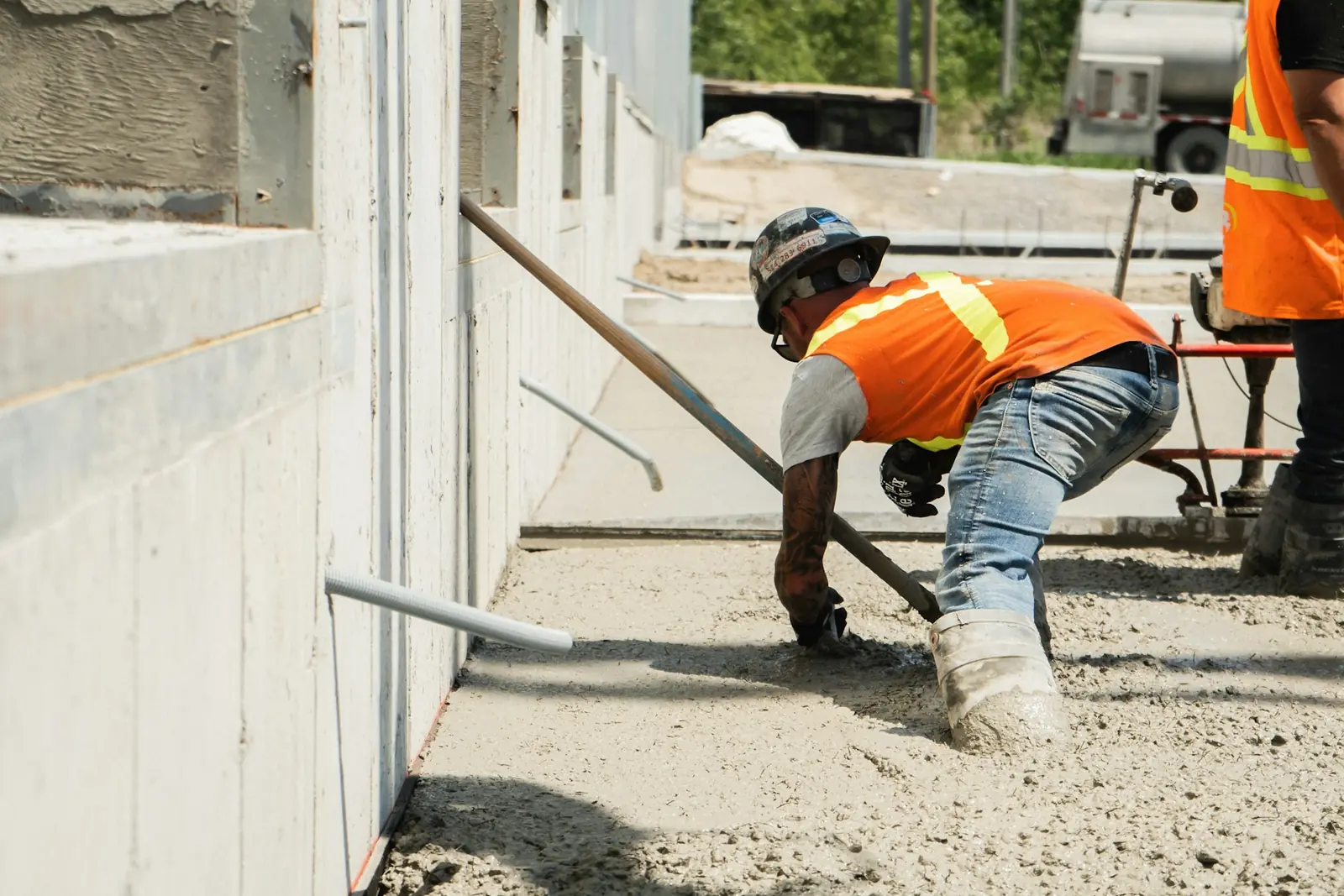
The work you never see after pour day decides how long a driveway survives freeze-thaw winters. Here is what goes into a typical Troy driveway replacement:
- Tear-out and haul-away. We break out the old concrete and remove it from the site, then dig out soft spots and organic soil.
- Base. We place and compact a granular base, about 4 inches on most residential jobs. Wet clay areas get extra depth.
- Thickness. Car-only driveways get 4 inches. If delivery trucks, a camper or a heavy pickup will cross it, we pour 5 inches. Our driveway thickness guide explains why.
- Mix. We specify air-entrained concrete in line with the Michigan Concrete Association driveway guidelines: about 4,000 psi, a water-cement ratio near 0.45 and roughly 6.5 percent air.
- Slope. About 1/8 inch per foot, away from the garage and house, so meltwater drains instead of freezing in place.
- Joints. Control joints every 8 to 10 feet on a 4- to 5-inch slab, cut or tooled early so cracks form where we want them.
- Finish and cure. A light broom finish for traction, then curing compound and at least three days of moisture protection.
Widening and new driveways
Many Troy homes built in the 1970s and 1980s have a driveway sized for one or two smaller cars. Widening is one of our most common requests. We match the new section to the old slab with an isolation joint or replace the whole driveway so the color and finish match. Before widening, check your setbacks. Some neighboring cities limit how much of a front yard can be paved. Sterling Heights, for example, caps front-yard pavement at 45 percent, which we cover on our Sterling Heights concrete page.
Decorative borders are another popular option. A stamped or exposed-aggregate border along a plain driveway adds curb appeal without the cost of stamping the whole slab. See stamped concrete for patterns and colors.
The driveway approach and permits
The approach is the section between the street and the public sidewalk, or the street and your property line where there is no sidewalk. In Troy it sits in the public right-of-way, so replacing it requires a Sidewalk and Approach Permit through Troy Engineering, a pre-pour inspection, and a 6-inch-thick pour. The public sidewalk crossing your driveway is thickened to 6 inches as well. We handle the sidewalk and approach work as part of the same project.
Driveways onto county roads are different. Where the road is under the Road Commission for Oakland County, the approach needs an RCOC permit instead, and we check which agency owns your road before quoting. Neighboring cities have their own rules, too. Rochester Hills requires 6 inches of 3,500 psi concrete over 4 inches of 21AA aggregate in the right-of-way, with no reinforcement and a 1-inch expansion joint.
Driveways we see around Troy
We replace a lot of original driveways in the subdivisions around Boulan Park off Crooks Road and north toward Square Lake, where long two-car drives from the late 1970s are wearing out. Closer to the Big Beaver corridor and Troy Community Center on Livernois, we see more short drives with heavily salted aprons and settled panels near the garage.
What drives the price
Driveway cost depends on square footage, how much concrete comes out, base repair, thickness, finish, access for the truck and pump, and whether the approach needs a permit. A plain broom finish costs less than stamped or colored concrete. We write a quote with each of those items listed so you can compare bids fairly. For more detail, read what a new concrete driveway costs in Troy.
Common questions
How long does a concrete driveway replacement take?
Most two-car driveways in Troy take two to three working days on site: tear-out and base prep first, then forming and pouring. After the pour, you can usually walk on it in a day or two and park a car on it after about seven days. Cooler fall weather can stretch that cure time, so we confirm the timing on pour day.
Should my new driveway have rebar or wire mesh?
Reinforcement helps hold cracks tight but does not stop them from forming. Joint spacing, a compacted base and the right thickness matter more. We discuss fiber, wire or rebar based on your soil and loads. Note that some cities, such as Rochester Hills, do not allow reinforcement in the portion of the approach within the public right-of-way.
Can you pour a new driveway over the old one?
We do not recommend it. An overlay hides the problems in the old slab, and those cracks usually telegraph through within a few winters. Overlays also raise the driveway height, which can create a lip at the garage and drainage trouble. A proper tear-out lets us inspect and fix the base, which is usually why the old driveway failed.
Why does my driveway need a separate permit for the approach?
The approach sits in the public right-of-way, not on your lot. Troy, like most nearby cities, controls that strip so approaches are built to a consistent 6-inch standard that holds up to plows and heavy vehicles. A city inspector checks the forms and base before we pour, and work done without the permit can be ordered removed.