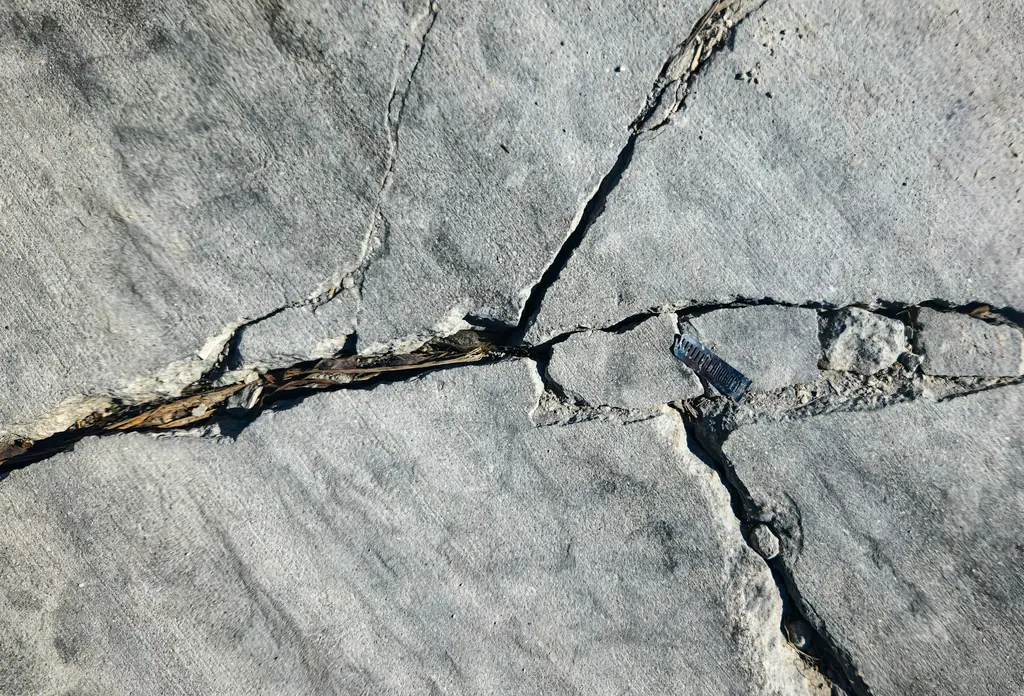
Concrete repair and leveling in Troy, MI makes sense when a slab has settled in one piece, has only hairline cracks, or has small surface spalls on otherwise sound concrete. In those cases, lifting with mudjacking or polyurethane foam, sealing cracks, or patching can cost far less than replacement. Slabs broken into moving pieces, scaled across most of the surface or sitting on a washed-out base usually need to be torn out. We look first and tell you which group your concrete falls into. Call (248) 453-1088.
The repair or replace decision
We use a simple set of questions when we look at a damaged slab:
- Is it one piece? A panel that dropped but stayed intact can often be lifted. A panel broken into three or four pieces will just crack again.
- How is the surface? Light scaling can be cleaned and sealed. Deep spalling across most of the slab means the top layer is failing, and a patch will not hold through winter.
- Why did it move? If the base washed out from a downspout or a leaking gutter, lifting without fixing the water source is wasted money.
- How old is it? A sound slab that is relatively young is a good candidate for leveling. A slab near the end of its life may not be worth the investment.
- What does the city say? In Troy, the sidewalk program allows leveling of public flags that are not cracked or spalled. Cracked or spalled flags must be replaced.
Leveling: mudjacking and foam lifting
Both methods work by drilling small holes through the slab and pumping material underneath to raise it back into position.
- Mudjacking uses a cement-based slurry. It is heavier and has been used for decades. The holes are larger, about an inch or more.
- Polyurethane foam lifting uses expanding foam. It is lightweight, cures fast and uses smaller holes. It typically costs more per job but adds little weight to weak soils.
Either way, the holes are patched afterward, and the joint around the slab should be sealed to keep water out. Lifting works best on driveways, walks, patios and garage floors that dropped in one piece. It does not fix scaling or broken concrete.
Crack repair and joint sealing
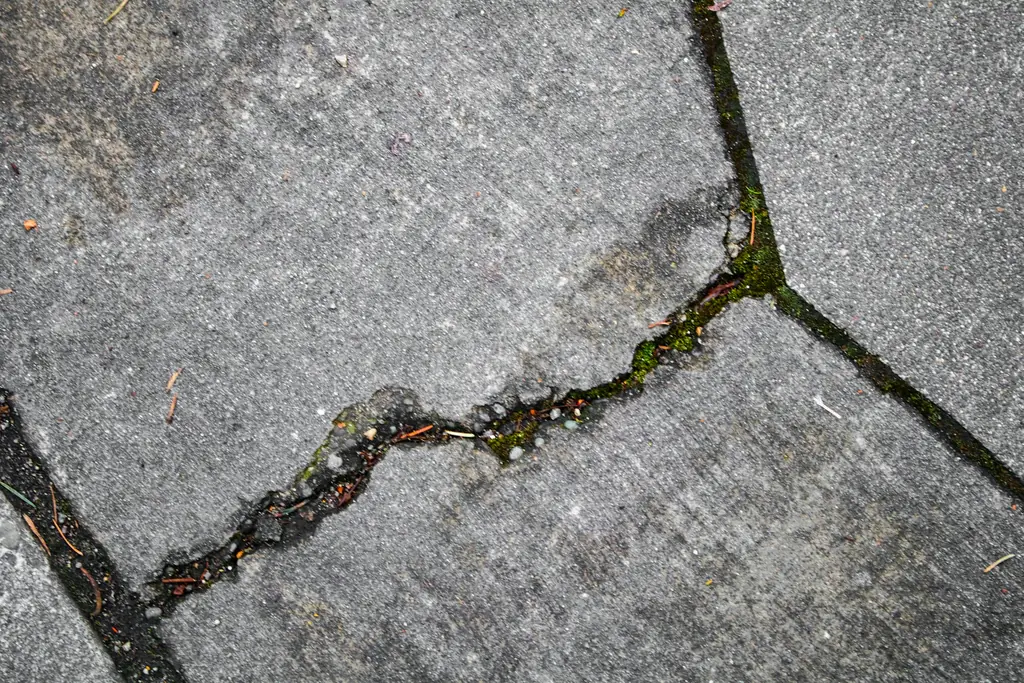
Hairline cracks are normal in concrete and often cosmetic. Wider cracks that let water in deserve attention, because water under the slab washes out the base and freezes in winter. We clean and seal cracks with a flexible sealant, and we reseal open joints between slabs and along the house. That simple step can keep a slab in service for several more winters.
The joint between a driveway and the garage slab, and the joint along the house foundation, are the two most important to keep sealed. Water that gets in there tends to end up in the base or the basement.
Patching spalls and scaling
Small spalls, where a chip of the surface has popped off, can be patched with a polymer-modified repair mortar if the concrete around them is sound. Broad scaling across a whole driveway or step is a different story. It usually means the original concrete lacked enough entrained air or was finished with too much water, and patches will keep popping off. In those cases, replacing the steps or slab is the honest answer.
Sunken sidewalks and trip hazards
Sunken sidewalk flags are one of the most common reasons owners call us. If your public sidewalk has been marked, check whether the notice allows leveling. If the flag is intact, lifting it is cheaper than replacement. If it is cracked, replacement is required. We handle both through our sidewalks and walkways service and pull the permit when one is needed.
Repairs we see around Troy
Near Stage Nature Center and the low-lying streets along the Rouge River, settled patios and garage aprons are common, often caused by wet soil and downspouts discharging next to the slab. In older neighborhoods around Troy Historic Village, we see more front walks lifted by tree roots and steps that have pulled away from the house.
We also assess repairs outside Troy. Many 1950s ranches in Madison Heights have sunken walks and drives that are good candidates for leveling, while wooded lots in Bloomfield Township bring root-lifted slabs.
Getting a straight answer
We are a replacement contractor, too, so it would be easy to push every job toward tear-out. We do not. If your slab is a good candidate for lifting or repair, we will say so plainly, even if that means a smaller job for us. For a deeper look at the trade-offs, read concrete leveling vs replacement.
Common questions
Is mudjacking or foam lifting better?
Both work when the slab is intact. Mudjacking uses a heavier cement slurry and larger holes and often costs less. Polyurethane foam is lighter, cures faster and uses smaller holes, which helps on weak soils, but usually costs more. The bigger factor is whether the slab is a good candidate at all and whether the water problem underneath has been fixed.
How long does concrete leveling last?
Leveling can last a long time if the cause of settlement is fixed. If a downspout or poor grading keeps washing out the base, the slab may sink again. Sealing the joints and cracks after lifting helps keep water out. A slab that is cracking into pieces will not hold its position long, which is why we recommend replacement in that case.
Can spalled concrete be resurfaced?
Light surface scaling can sometimes be resurfaced with a thin polymer overlay, but results in Michigan are mixed because freeze-thaw and salt attack the bond. Overlays work best on small, protected areas. When spalling is widespread or deep, the underlying concrete is usually weak, and replacement with air-entrained concrete is the longer-lasting fix.
When should I replace instead of repair?
Replace when the slab is broken into multiple moving pieces, when scaling covers most of the surface, when the base has washed out under a large area, or when a public sidewalk flag is cracked or spalled and the city requires replacement. If the slab is intact and the surface is sound, leveling or crack sealing is usually the better value.